Can You Still See the Northern Lights in Iceland During Spring?
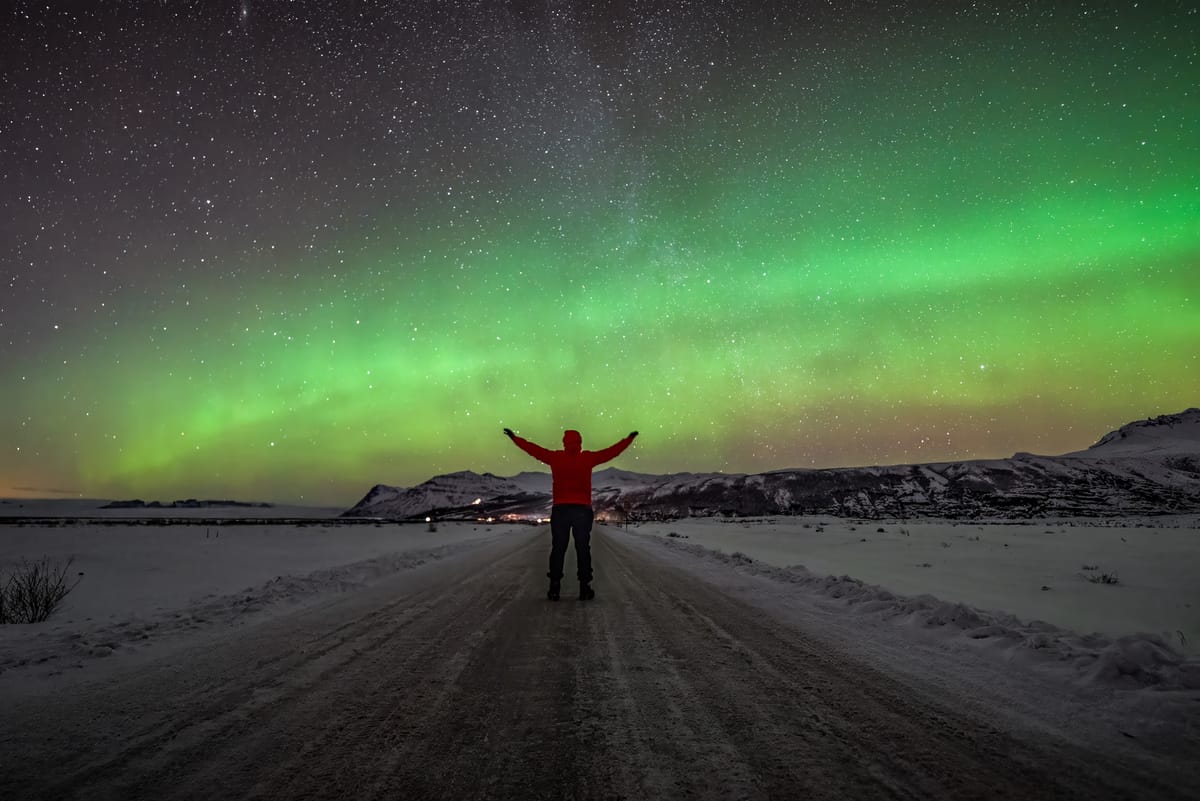
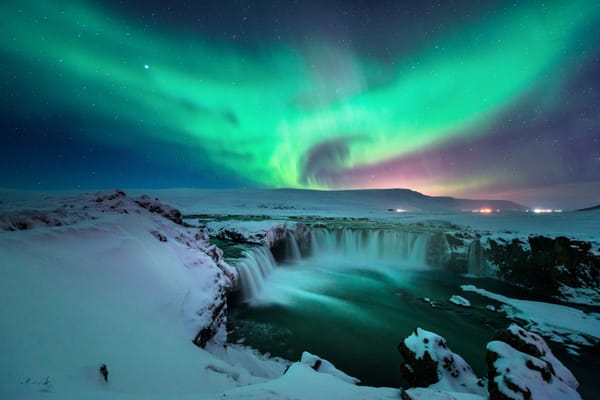
Many travelers wonder if it’s possible to see the Northern Lights in Iceland during spring—and the answer is yes, especially through early April. While the Northern Lights season peaks between September and March, aurora borealis displays can still appear in the spring when conditions are right.
Longer daylight hours make sightings less frequent, but clear, dark nights remain possible in March and early April, especially away from city lights and light pollution. Locations along the South Coast or in northern Iceland are ideal for northern lights hunting.
With strong solar wind activity and accurate aurora forecasts, your chances improve dramatically. For the best experience, stay up late, head to rural areas, and hope for clear skies. If you're interested in aurora hunting, spring offers a quieter, equally magical window to witness the Northern Lights in Iceland.
What Months Count as Spring in Iceland?
Spring in Iceland typically spans March, April, and May, offering a transitional season where winter’s icy grip gradually gives way to blooming landscapes and milder temperatures. While snow may linger—especially in the north—March still brings dark skies and a chance for northern lights displays, especially in rural areas like Thingvellir National Park, which benefits from low light pollution.
Aurora activity remains strong through early April, making this part of spring a rewarding time for northern lights viewing. As days grow longer in mid to late April, aurora sightings become less frequent, and by May, the nights are often too bright for effective northern lights viewing.
The visibility of the northern lights depends on the balance of aurora activity, dark skies, and location. Areas away from city lights—such as Thingvellir National Park or the remote South Coast—offer ideal conditions in early spring. While May is better for scenic drives and waterfall hikes, if witnessing the aurora borealis is a priority, plan your trip during March or early April when nature still grants enough darkness for spectacular skies.
Is Spring a Good Time to See the Northern Lights?
Yes, spring can still be a good time to see the northern lights in Iceland, especially in March and early April. During this period, Iceland still experiences dark skies for several hours each night, providing a window for aurora sightings. In fact, aurora activity is often quite strong in March due to increased solar wind patterns associated with the spring equinox.
As daylight hours increase throughout April, the chance to catch northern lights displays diminishes—by late April and May, the nights are too bright, and northern lights viewing becomes unlikely. However, during early spring, rural areas with low light pollution, such as Thingvellir National Park or the South Coast, offer excellent viewing opportunities.
To increase your chances, check local aurora forecasts, stay up late (around 10 PM to 2 AM), and avoid areas with city lights. The visibility of the aurora borealis depends not only on aurora activity, but also on clear skies, cloud cover, and your location.
So, while spring isn’t peak northern lights season, it still offers a strong opportunity to witness this natural wonder—alongside the bonus of milder weather and fewer crowds compared to mid-winter.
Can You See the Northern Lights in Reykjavík?
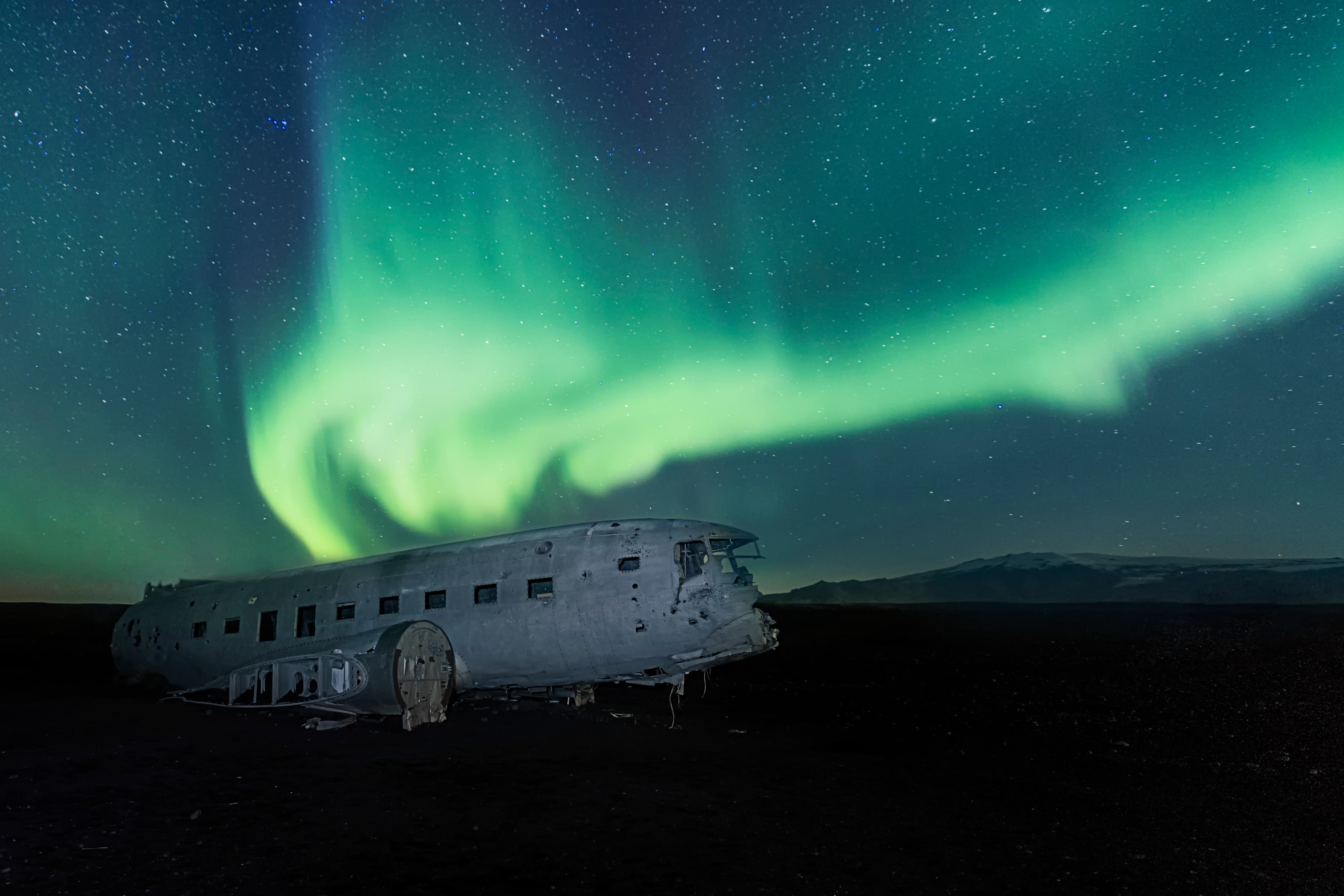
Yes, you can see the northern lights in Reykjavík, but it’s not always easy. While the capital city lies far enough north to experience aurora borealis activity, urban light pollution from city lights can significantly reduce visibility. To catch a good display within Reykjavík, conditions must be just right: strong aurora activity, dark skies, clear skies, and minimal cloud cover.
For the best chance, head to darker areas within the city such as Grótta Lighthouse on the Seltjarnarnes Peninsula or Öskjuhlíð Hill behind Perlan. These spots offer wide horizons and less artificial light. Even so, the northern lights viewing experience is much stronger outside the city.
If you’re staying in Reykjavík, consider joining a northern lights hunting tour. These tours take you away from the city lights to remote areas with low light pollution, greatly increasing your chances of seeing a strong display. While Reykjavík can offer the occasional lucky glimpse, venturing beyond the city gives you the best chance for a truly unforgettable northern lights experience.
Best Locations to Spot the Northern Lights in Spring
The northern lights in Iceland are one of the most magical natural wonders you can experience—but many travelers assume they're only visible in deep winter. While it's true that northern lights season peaks from September through March, aurora sightings are still possible well into spring, especially in March and early April. The key is to find places with low light pollution, dark skies, and good visibility of the horizon.
Below are the best places to see the northern lights in Iceland during spring—offering both accessibility and ideal viewing conditions.
1. Thingvellir National Park
Located only about 45 minutes from Reykjavík, Thingvellir National Park is a UNESCO World Heritage Site known for its geological significance and dramatic landscapes. It's also one of the most accessible locations for northern lights viewing near the capital.
In spring, when snow is melting but nights remain dark, Thingvellir offers a great combination of clear viewpoints and low light pollution. The wide-open rift valley gives you an unobstructed sky for capturing brilliant aurora displays, especially if you're visiting in early April.
Pro tip: Go during the week to avoid local weekend crowds and check the aurora forecasts before heading out.
2. Snæfellsnes Peninsula
Often called “Iceland in Miniature” because it has a little bit of everything—mountains, glaciers, black sand beaches, and waterfalls—the Snæfellsnes Peninsula is also an excellent location for aurora hunting in spring.
Its distance from Reykjavík (about a 2–3 hour drive) means the skies are free from city lights, and the scenery creates stunning foregrounds for northern lights photography. If you stay in the area overnight—especially around towns like Arnarstapi, Hellnar, or Grundarfjörður—you’ll enjoy dark skies and fantastic coastal backdrops.
With continued aurora activity through March and into early April, this is a perfect spring destination.
3. Northern Iceland (Akureyri and Lake Mývatn)
For some of the best aurora sightings in Iceland—especially in spring—head north. The region around Akureyri, Iceland’s second-largest city, and Lake Mývatn is renowned for strong aurora borealis displays.
Northern Iceland stays darker longer than the south in early spring, giving you more hours of potential visibility. The area around Lake Mývatn is particularly ideal because it's remote, quiet, and surrounded by geothermal features like steam vents and lava fields—adding drama to your northern lights photos.
Stay at a countryside guesthouse or lodge with outdoor hot tubs and watch the sky while soaking in warm water. Just remember to bundle up—the temperatures here in March and early April can still be below freezing.
4. South Coast (Vík and Surroundings)
Though more famous for its waterfalls and black sand beaches, the South Coast is also a fantastic region to see the northern lights in spring. Towns like Vík, Kirkjubæjarklaustur, and even the areas near Jökulsárlón Glacier Lagoon offer quiet, low light pollution zones perfect for aurora activity.
Because this route is popular with travelers year-round, you’ll find plenty of hotels, guesthouses, and camping spots. Book a place that’s set away from the town center, ideally facing north with a wide view of the horizon. On a clear night, you may even catch the aurora borealis dancing over Diamond Beach, creating an unforgettable scene.
5. Reykjanes Peninsula
If you're short on time but still hoping for a glimpse of the northern lights in Iceland, the Reykjanes Peninsula—home to Keflavík Airport and the Blue Lagoon—is a solid spring option.
You won’t get the darkest skies here, but you can reach remote viewing points within 30–40 minutes of Reykjavík. Coastal areas like Valahnúkur cliffs or the geothermal zone near Gunnuhver offer wide views with minimal light pollution. With a rental car and a clear aurora forecast, you can chase the lights even on a short visit.
Tips for Northern Lights Hunting in Spring
- Go early in spring: The best chance for northern lights displays in spring is during March and early April. By mid to late April, Iceland’s nights are too bright for effective viewing.
- Stay multiple nights: Northern lights viewing depends on several factors—aurora activity, clear skies, and darkness. The more nights you stay, the better your chances.
- Use aurora tracking tools: Apps like Aurora Forecast, Vedur.is, and My Aurora Forecast offer real-time updates and visibility predictions.
- Avoid city lights: Even in Reykjavík, city lights can overpower moderate aurora displays. Choose rural areas or national parks for dark skies.
- Check the KP index: The strength of aurora activity is measured by the KP index (0–9). A KP of 3–4 is usually sufficient for Iceland.
- Bundle up and be patient: Nights in spring can still be cold. Dress in layers, bring a thermos, and prepare to wait—it’s often a long game.
Ideal Conditions for Aurora Viewing in Spring
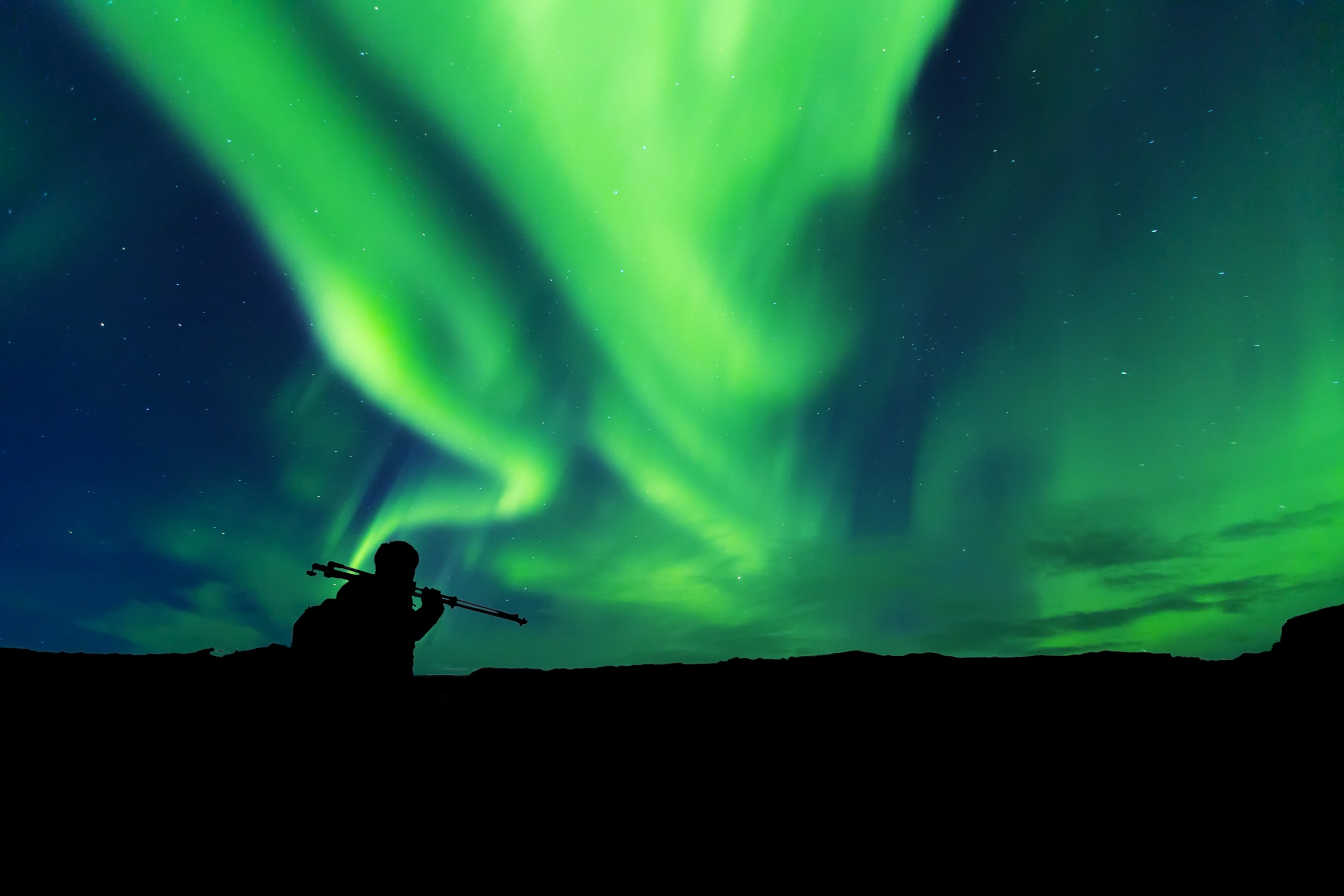
Spring in Iceland, especially March and early April, can still offer excellent opportunities for witnessing the aurora borealis—but catching a good display depends on a few ideal conditions coming together. While solar activity plays a major role, the environment you’re viewing from is equally important.
1. Dark Skies and Limited Light Pollution
To begin with, dark skies are essential for aurora visibility. Although daylight increases throughout spring, March and early April still provide several hours of darkness, especially in rural areas. Staying away from city lights is crucial—urban areas like Reykjavík suffer from light pollution, which can wash out weaker aurora displays. Instead, head to low light pollution areas such as Thingvellir National Park, the South Coast, or Northern Iceland, where clear, uninterrupted views of the sky give you the best chance to catch the lights.
2. Clear Skies and Low Cloud Cover
Even with strong aurora activity, clear skies are non-negotiable. Cloud cover is one of the most common reasons travelers miss the northern lights. Check cloud forecasts on websites like Vedur.is to find cloud-free areas. You may need to drive a short distance from your lodging to escape local cloud banks.
3. Solar Activity and Aurora Forecasts
The strength and frequency of aurora sightings depend on solar weather. Solar storms release charged particles (via solar wind) that interact with Earth’s magnetic field, creating the northern lights. This activity is measured by the KP Index, which ranges from 0 to 9. A KP level of 3–4 is typically enough to see the aurora borealis in Iceland. Check real-time aurora forecasts using apps like Aurora Forecast or My Aurora Forecast & Alerts.
4. Ideal Time of Night
In spring, the best time to spot the northern lights is between 10 PM and 2 AM, when the sky is at its darkest. Be patient—aurora displays often come in waves and can appear unexpectedly.
Give yourself multiple nights in Iceland to improve your chances. The more time you spend in dark, clear-sky areas with active aurora forecasts, the more likely you are to witness this incredible phenomenon—even in spring.
What Else to Expect in Iceland During Spring
Spring in Iceland—especially March through May—is a season of transformation. While aurora sightings are still possible in early spring, especially in March and early April, the country begins shifting from its icy winter landscape into a world of thawing waterfalls, blooming mosses, and longer days. Dark skies grow shorter as daylight increases, especially by late April, but milder temperatures make exploring the outdoors more comfortable.
In March, snow still covers many areas, so you can enjoy winter activities like ice caving, glacier hiking, and hot spring bathing surrounded by snow. By April and May, roads begin reopening, making self-drive trips along the South Coast or Golden Circle more accessible. Tourist crowds remain low until summer, and prices are generally more budget-friendly than in peak season.
Birdlife returns in spring, and by May, puffins begin nesting along coastal cliffs. While you may still need to pack warm layers, you’ll enjoy a quieter, more balanced experience—combining winter’s magic with summer’s accessibility. Spring offers the best of both worlds in Iceland.
Are Iceland’s Hot Springs Worth Visiting?
Yes—Iceland’s hot springs are absolutely worth visiting and are often a highlight of any trip. Thanks to the island’s rich geothermal activity, you’ll find both natural and developed hot springs throughout the country. Soaking in warm, mineral-rich water surrounded by dramatic landscapes is a deeply relaxing and uniquely Icelandic experience.
For those seeking luxury, the Blue Lagoon and Sky Lagoon offer premium spa facilities, complete with swim-up bars, saunas, and even a seven-step ritual experience. These are great options if you want comfort and amenities, including private changing facilities and beautiful architecture.
If you're after a more natural setting, hidden gems like the Secret Lagoon, Reykjadalur hot river, or Landmannalaugar pools provide a wilder, more intimate soak—often with stunning views and far fewer crowds.
Hot springs can be enjoyed year-round, but they feel especially magical in winter or early spring, when you're surrounded by all the snow and possibly even the northern lights. Whether you’re visiting Iceland in summer or winter, taking time to relax in a hot spring adds balance, warmth, and a local touch to your adventure. Don’t skip this soul-soothing part of Icelandic culture.
Other Attractions in Iceland
While the northern lights are a major draw, there are many other attractions in Iceland that make the country worth visiting year-round. During Icelandic winter, visitors can explore Iceland under a blanket of snow, discovering frozen waterfalls, icy caves, and geothermal wonders. The Golden Circle—home to Thingvellir National Park, Geysir, and Gullfoss—is a must-see, offering dramatic landscapes and rich history.
The Snæfellsnes Peninsula is another highlight, often called “Iceland in Miniature” for its mix of volcanoes, black sand beaches, and glacier-capped peaks. For those chasing auroras, its remote location beneath the auroral oval makes it an ideal spot for dark skies and low light pollution.
Other attractions include the stunning Jökulsárlón Glacier Lagoon, natural hot springs, and the vibrant city of Reykjavík. Whether you're seeking adventure or relaxation, Iceland delivers unforgettable experiences beyond the lights.
FAQs
Can you see the northern lights in Iceland during spring?
Yes! While the northern lights months are strongest from September to March, sightings can still happen in mid April. You’ll need dark, clear night sky conditions and a strong aurora forecast Iceland. The further you are from the city center, the better your chances—especially in northern regions or East Iceland.
Why does daylight affect northern lights visibility?
By late April, too much daylight makes it harder to see the northern lights dancing. The midnight sun begins to take over, limiting dark hours. However, during early spring, long nights still allow good visibility under the right weather conditions.
Where are the best places to go aurora hunting in spring?
Look beyond Reykjavík. Try the Snæfellsnes Peninsula, lava caves, or areas near the Arctic Circle. These remote areas in the northern hemisphere have low light pollution and a high chance of catching the dancing lights. Consider a super jeep tour or self drive tour for flexibility.
What should I pack and expect?
Spring brings unpredictable weather, so bring warm clothes. Check the weather forecast and be patient—this natural phenomenon depends on solar particles, the earth’s magnetic field, and Iceland’s ever-changing skies.
Conclusion
Yes, you can still see the northern lights in Iceland during spring, especially in March and early April. While the nights grow shorter, there are still several dark hours—perfect for spotting the aurora borealis if the skies are clear and aurora activity is strong. Locations like Jökulsárlón Glacier Lagoon, Thingvellir National Park, and the South Coast offer excellent views with low light pollution.
Spring also brings the bonus of fewer crowds, milder weather, and access to other attractions—like waterfalls, hot springs, and early birdwatching near the coast. With the right conditions and a bit of patience, springtime aurora hunting can be just as rewarding as in peak winter months. Combine it with Iceland’s dramatic landscapes, and you’ll have a trip that’s both peaceful and unforgettable.