Mastering Reading Iceland’s Aurora Forecast Like a Pro: Step-by-Step Map Guide
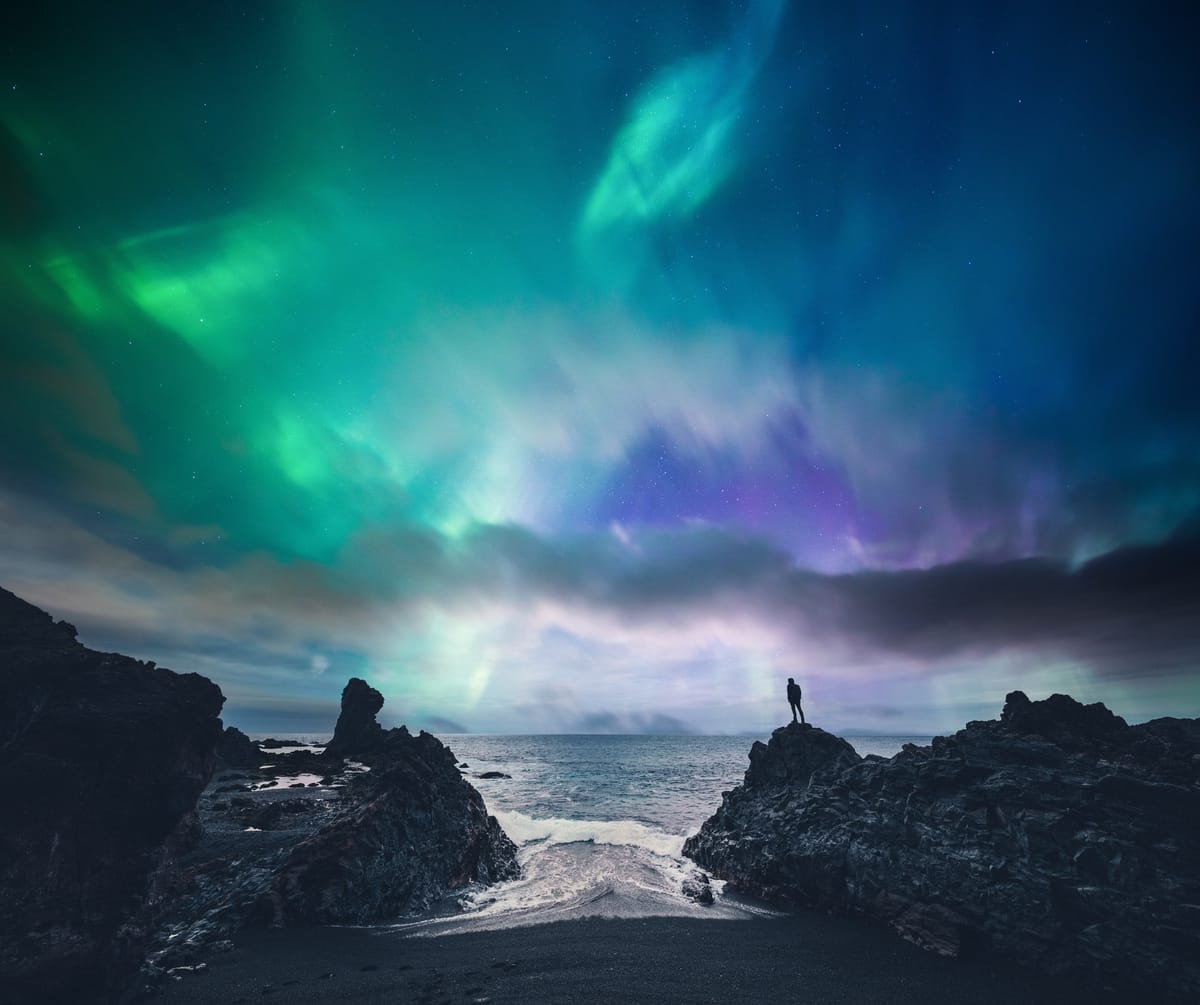
To witness the Northern Lights in Iceland is to chase magic. But that magic doesn’t just happen—you must time, read, and interpret forecasts skillfully.
In 2025, with high solar activity during Solar Cycle 25, Iceland offers some of the best odds ever for spotting auroras. Yet without understanding how to read the maps, KP indexes, cloud charts, and local forecasts, many travelers end the night disappointed.
This guide will teach you exactly how to read Iceland’s aurora forecasts like a local, step by step. You’ll learn how maps work, which layers to analyze, what KP really means in Iceland, and how to combine forecast data with local weather maps and nighttime strategy. By the end, you’ll be able to decide whether to chase the aurora tonight—or wait.
What Is the Aurora Forecast, Really?
How Auroras Form & Why Forecasting Is Possible
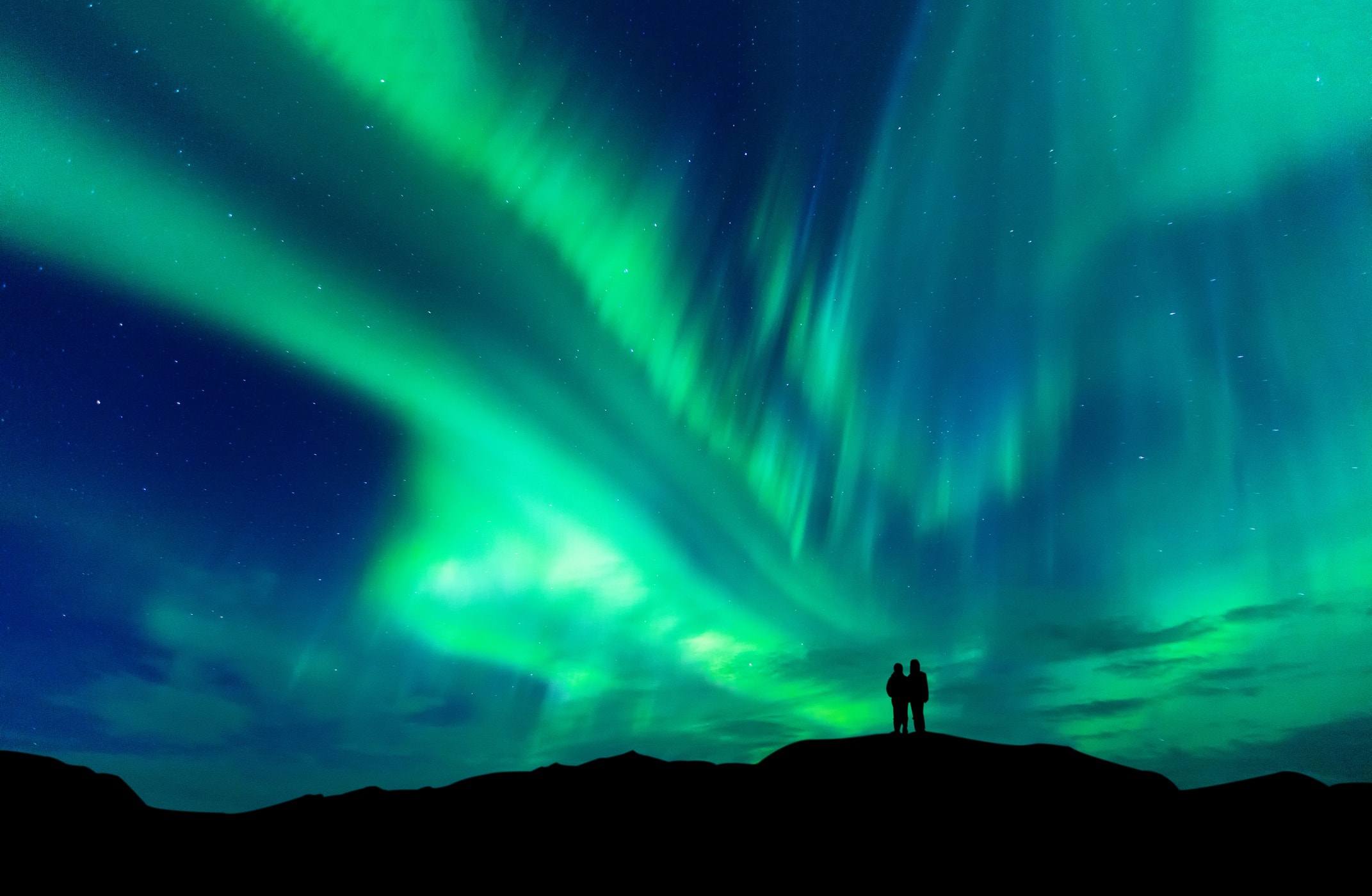
The Northern Lights, or Aurora Borealis, arise when solar wind — charged particles ejected by the sun — hits Earth’s magnetosphere. These particles funnel along magnetic field lines toward the poles, colliding with atoms in the upper atmosphere and causing light emissions in greens, reds, purples, and blues.
Because solar activity can be measured (sunspots, coronal holes, solar flares) and Earth’s magnetic response is tracked, forecasters can predict the likelihood of aurora activity in given regions. These predictions are consolidated into aurora forecasts, combining geomagnetic indices, solar wind measurements, and cloud cover maps to estimate visibility.
Key Components of an Aurora Forecast
A robust aurora forecast includes several layers of data:
- Auroral Activity / KP Index — a measure of geomagnetic disturbance (scale 0–9).
- Solar Wind Speed & Direction — how fast solar particles are arriving, and from which direction.
- Interplanetary Magnetic Field (IMF) / Bz component — its orientation influences how strongly solar wind couples with Earth’s field.
- Cloud Cover Maps — showing different cloud altitudes (low, mid, high), critical for visibility.
- Time Windows / Darkness Metrics — when night is sufficiently dark.
- Local Overlays & Alerts — live reports from locals, crowd-sourced sightings, or regional sensors.
In Iceland, combining the KP index with cloud cover and local updates is essential — even a high KP forecast can be wasted if clouds block the view.
How Often Do Aurora Forecasts Turn Out Right?
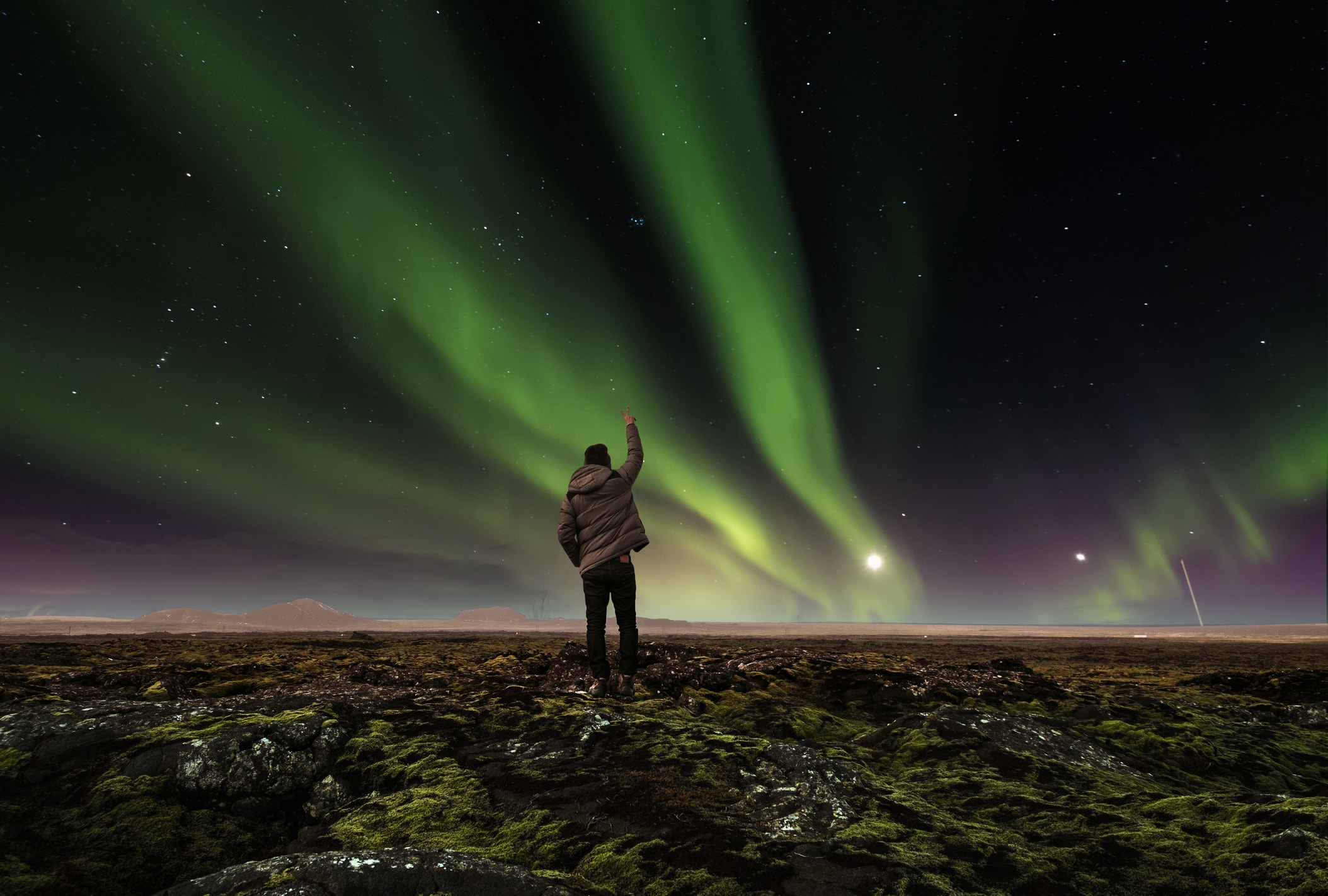
Aurora forecasts are remarkably useful, but not perfect. Because Iceland’s weather changes rapidly, a forecast made hours ahead may shift significantly. The Icelandic Met Office issues cloud forecasts every six hours to update predictions.
Many local guides caution that KP forecasts are a broad average; local aurora surges may occur in nearby zones that a global KP map misses. A Reddit user admonished:
“Kp Index is not the best indicator when hunting auroras — it’s a global average that doesn’t capture local fluctuations.”
So while forecasts are critical for planning, they’re a tool — not a guarantee. Always leave flexibility in timing, monitor live updates, and don’t abandon nights too early.
Step-By-Step: How to Read Iceland’s Aurora Forecast Maps
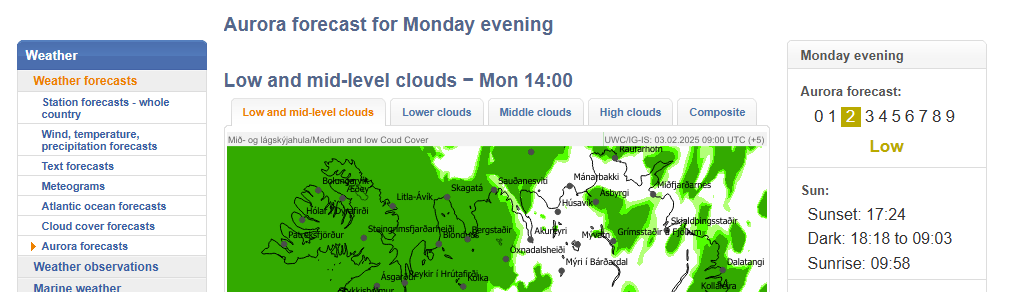
This guide outlines the process for effectively reading and interpreting Iceland's aurora forecast maps:
Step 1: Access Reputable Forecast Sites
Begin by consulting trusted sources. Two of the most authoritative in Iceland include:
- Vedur.is — the official site of the Icelandic Meteorological Office, providing both aurora and cloud forecasts.
- Perlan’s Aurora Forecast — presents aurora activity and cloud forecasts through visual maps.
Additional useful resources encompass Hello Aurora (app/website), Aurora Forecast IS, and global space weather services such as NOAA or SWPC for broader context.
When accessing a forecast map, perform the following actions:
- Select Iceland as your designated region.
- Choose the date and time window for your observation (typically 22:00 – 03:00 local time).
- Activate the cloud cover layer.
- Display the aurora strength / KP index overlay.
- If available, enable solar wind / IMF data and real-time sighting reports.
Step 2: Interpret the Aurora Activity / KP Layer
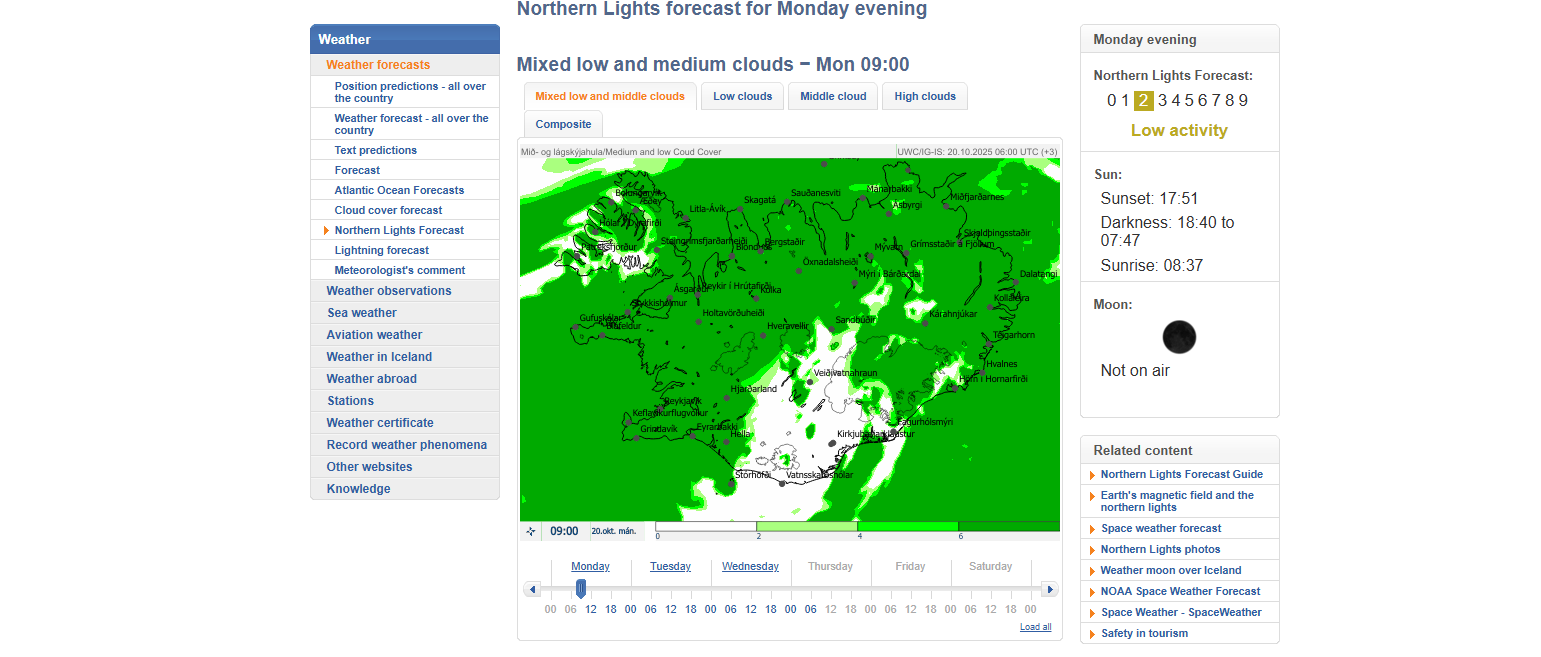
The KP index is typically presented as color-coded bands or values overlaid on Iceland:
- KP 0–1: Indicates very low geomagnetic activity; faint auroras are likely only visible at extreme northern latitudes or through cameras.
- KP 2–3: Represents moderate activity, which is often favorable in Iceland due to its latitude. Green auroras are likely visible in dark locations.
- KP 4–5+: Signifies strong activity. More vivid displays, potentially featuring multiple colors and motion, can be anticipated.
- KP 6–9: Rare, intense geomagnetic storms. The aurora may extend across various directions and become highly active.
Important consideration: Iceland is situated within the auroral oval, the zone where auroras frequently occur. Consequently, even a KP index of 1 or 2 can result in visible auroras in Iceland, particularly under clear skies.
Therefore, it is advisable not to entirely discount low KP forecasts; always cross-reference them with cloud maps and local updates.
Step 3: Read the Cloud Cover Layers
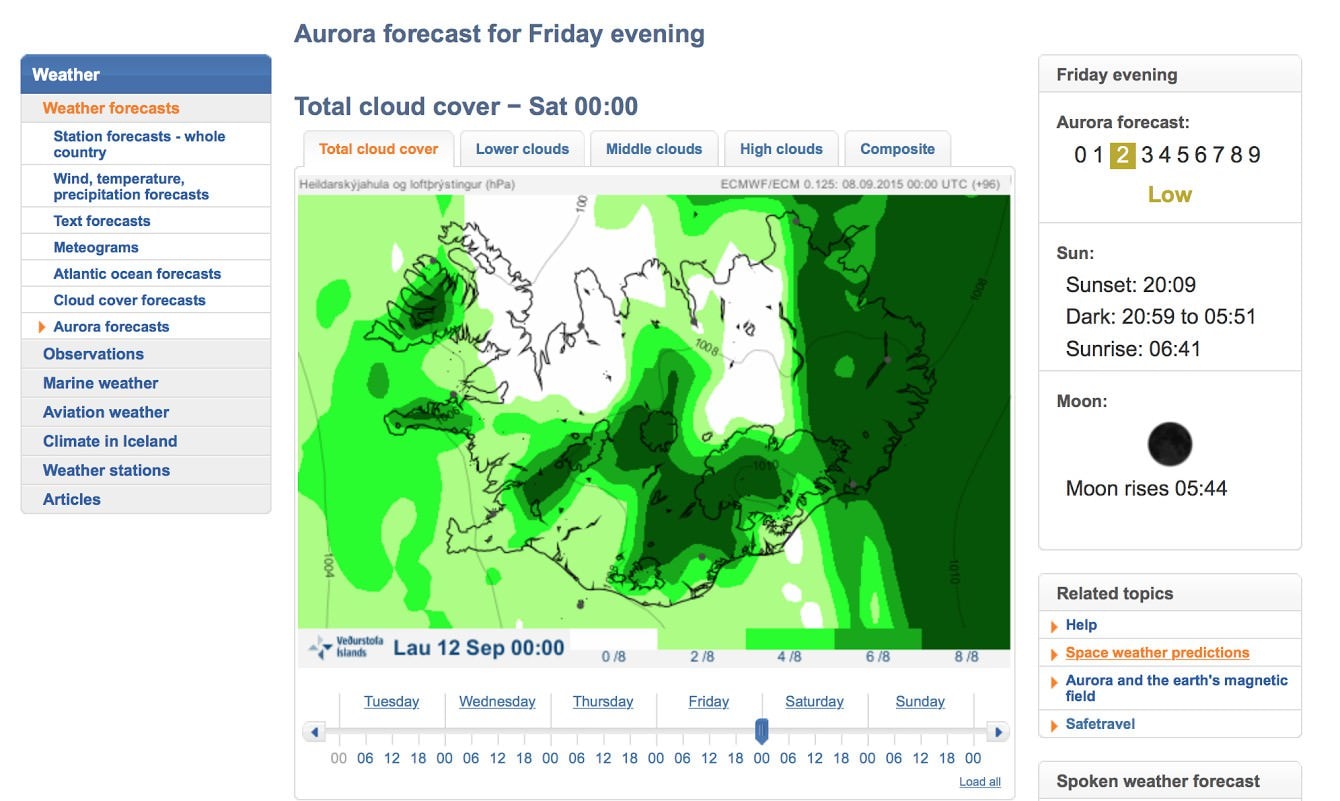
Cloud cover is a critical factor determining visibility. A high KP forecast coupled with heavy cloud cover will prevent any viewing opportunity. On forecast maps, cloud cover is depicted as shaded or colored regions. On Vedur.is, cloud layers are categorized by altitude: low, mid, and high.
- Low clouds (0–2 km): These are the most obstructive and will block the aurora entirely if dense.
- Mid clouds (2–5 km): May partially obstruct views, but gaps can sometimes be present.
- High clouds (5–13 km): These are typically thin and often transparent enough to allow aurora light to pass through.
Ascertain which altitude cloud layer is predicted, and prioritize areas showing clear zones (white) over dense shading (green), which indicates heavy cloud cover.
Step 4: Consider Solar Wind & IMF (Optional but Valuable)
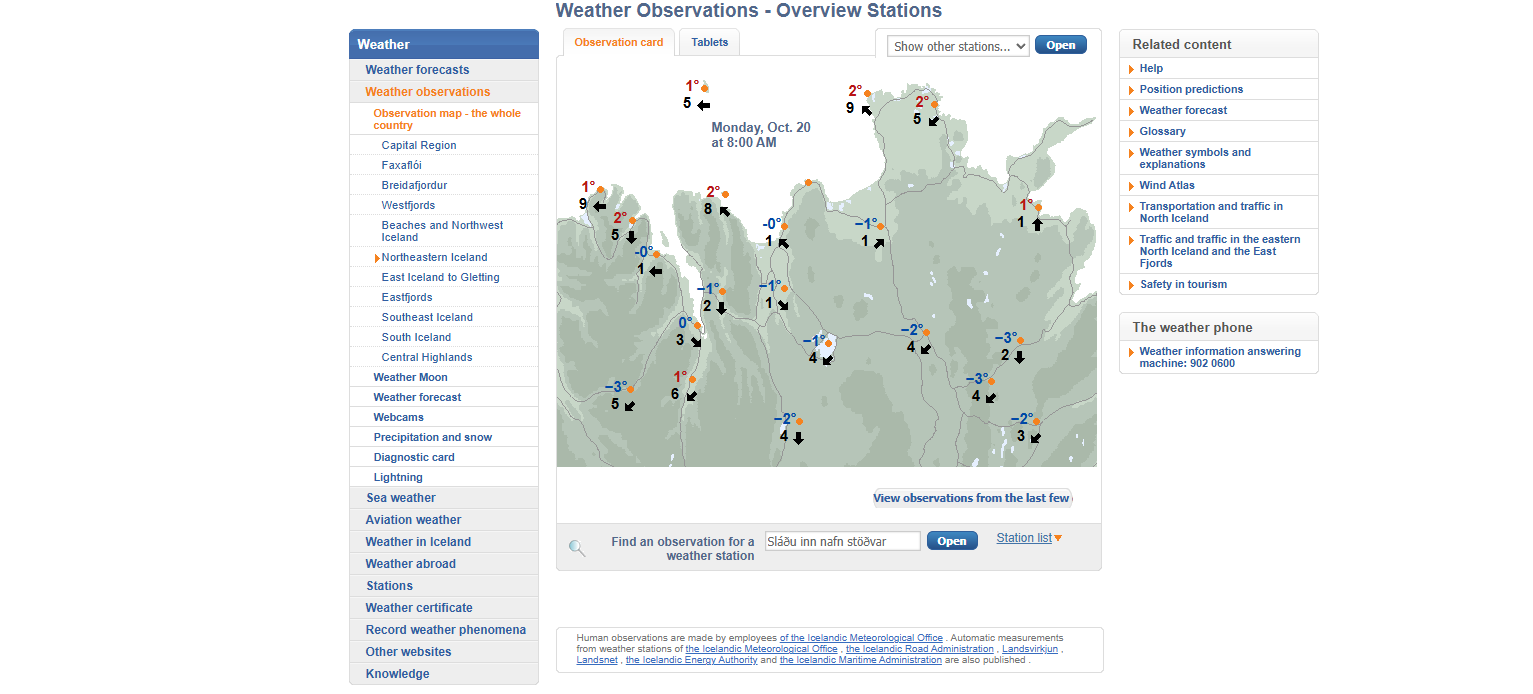
Some advanced forecasts incorporate solar wind speed, density, and IMF Bz orientation.
A high solar wind speed (e.g., >500 km/s) and a negative Bz (southward orientation) increase the probability of auroral displays. Perlan’s forecast occasionally includes this specific detail.
These layers can serve as supplementary indicators. If the KP is moderate but solar wind conditions are favorable, the overall forecast for aurora visibility is strengthened.
Step 5: Check Moon Phase and Darkness Timing
Moonlight can diminish the visibility of weaker auroras; nights near a full moon will reduce contrast. Many forecasts also provide moonrise/moonset times alongside sunset/sunrise times. Perlan’s forecast, for instance, includes these temporal metrics.
Optimal viewing conditions typically occur during a new moon or periods of low moon illumination, combined with extended darkness windows (approximately 22:00–02:00 local time).
Step 6: Utilize Real-Time Reporting & Crowdsourcing

Applications such as Hello Aurora allow users to upload live aurora photographs and reports. If observations are reported near your location, this provides a strong indication to commence your viewing.
Pay attention to push notifications for local spikes in geomagnetic activity. Integrate these alerts with crowdsourced reports to dynamically adjust your observation strategy.
Step 7: Synthesize Visual Layers and Make a Decision
Overlay the KP forecast onto the cloud maps. Identify time periods where a high aurora probability coincides with clear skies and sufficient darkness. Utilize color gradations or value thresholds to pinpoint optimal viewing windows.
Once identified, note the specific time frame (e.g., 23:00–01:00) and general direction(s) of potential visibility (often north). You will then be prepared for your aurora observation.
What KP Value Should I Look for in Iceland?
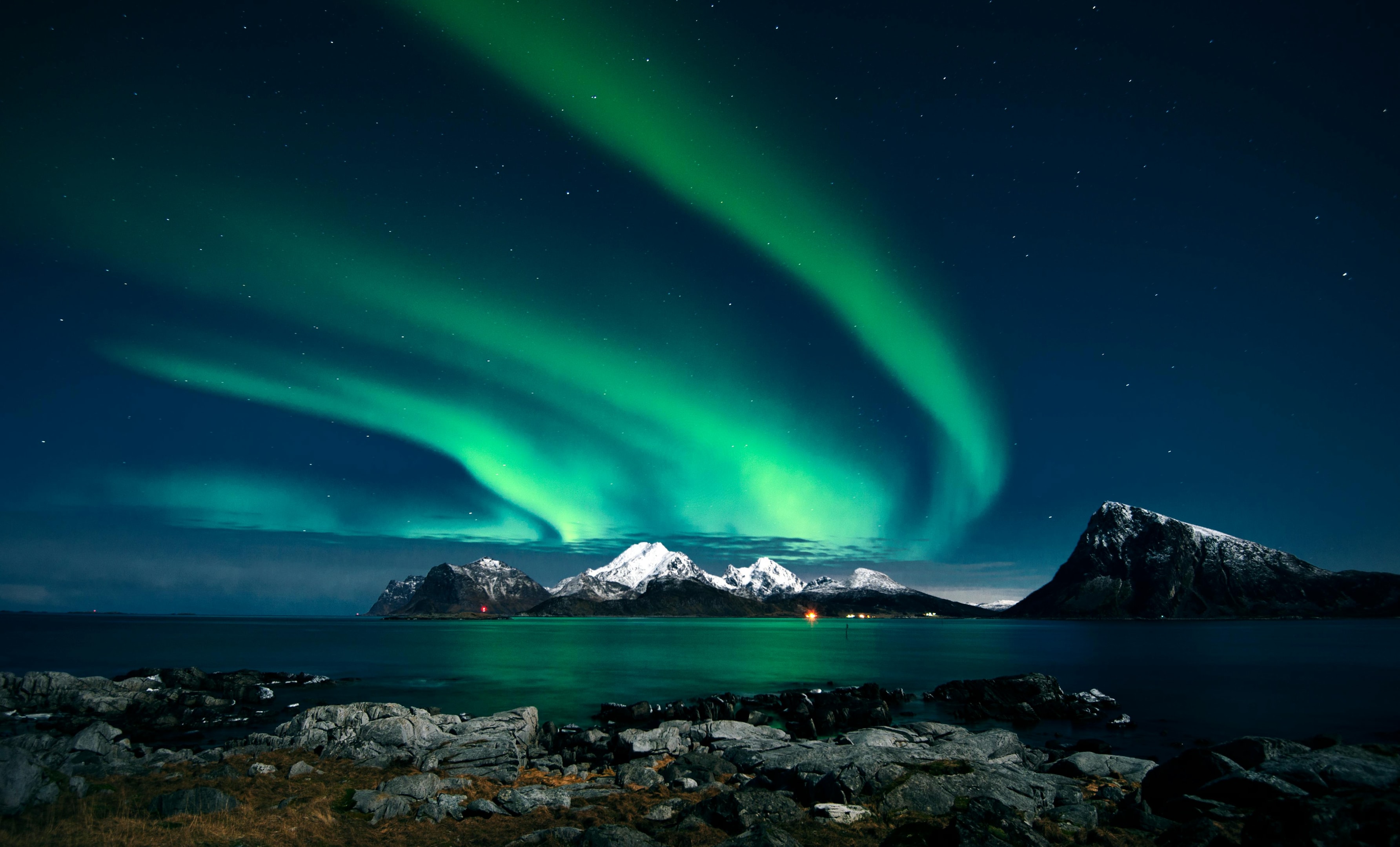
Since Iceland is close to the auroral oval, even low KP values can give you a chance to see the northern lights. Here's what to expect:
- KP 1–2: You might catch a faint display, especially if you're in a dark, rural spot.
- KP 3–4: Great chance for dancing green lights—get ready for a show!
- KP 5+: Big, bold displays with vibrant colors and lots of movement.
So, don’t rule out a night with a KP 2! If the skies are clear and it’s nice and dark, locals often spot auroras on those nights. Happy hunting!
Can Clouds Ruin a Perfect Aurora Night?
Yes — clouds are the biggest enemy. A strong aurora behind thick cloud cover is invisible to the eye. That’s why forecasting cloud layers is essential.
Low clouds (0–2 km) are most problematic. Mid and high clouds may partially obstruct but allow glimpses through gaps. If forecasts show a high chance of low clouds over your area, it’s wise to drive to nearby clear pockets indicated on the map.
The approach used by Icelandic forecast sites: show multiple cloud layers and predicted movement every six hours so watchers can choose zones of clearing skies.
How Do I Know Which Direction to Look?
So, you're in Iceland, ready for the magic. But where do you look? Generally, the auroras paint the northern horizons.
If you're in Reykjavík, cozy spots like Grótta Lighthouse or Öskjuhlíð Hill offer a fantastic view. But for that truly breathtaking experience, escape the city glow! Head to north-facing mountain slopes or wide-open fields – they promise expansive, uninterrupted sky canvases.
Pro tip: Some maps even feature handy direction indicators (like arrows or overlays) for aurora spotting. Combine these with a peek at local wind and cloud patterns, and you'll know exactly where to point your camera or simply surrender to the celestial dance!
Best Tools, Apps & Websites for Iceland Aurora Forecasts
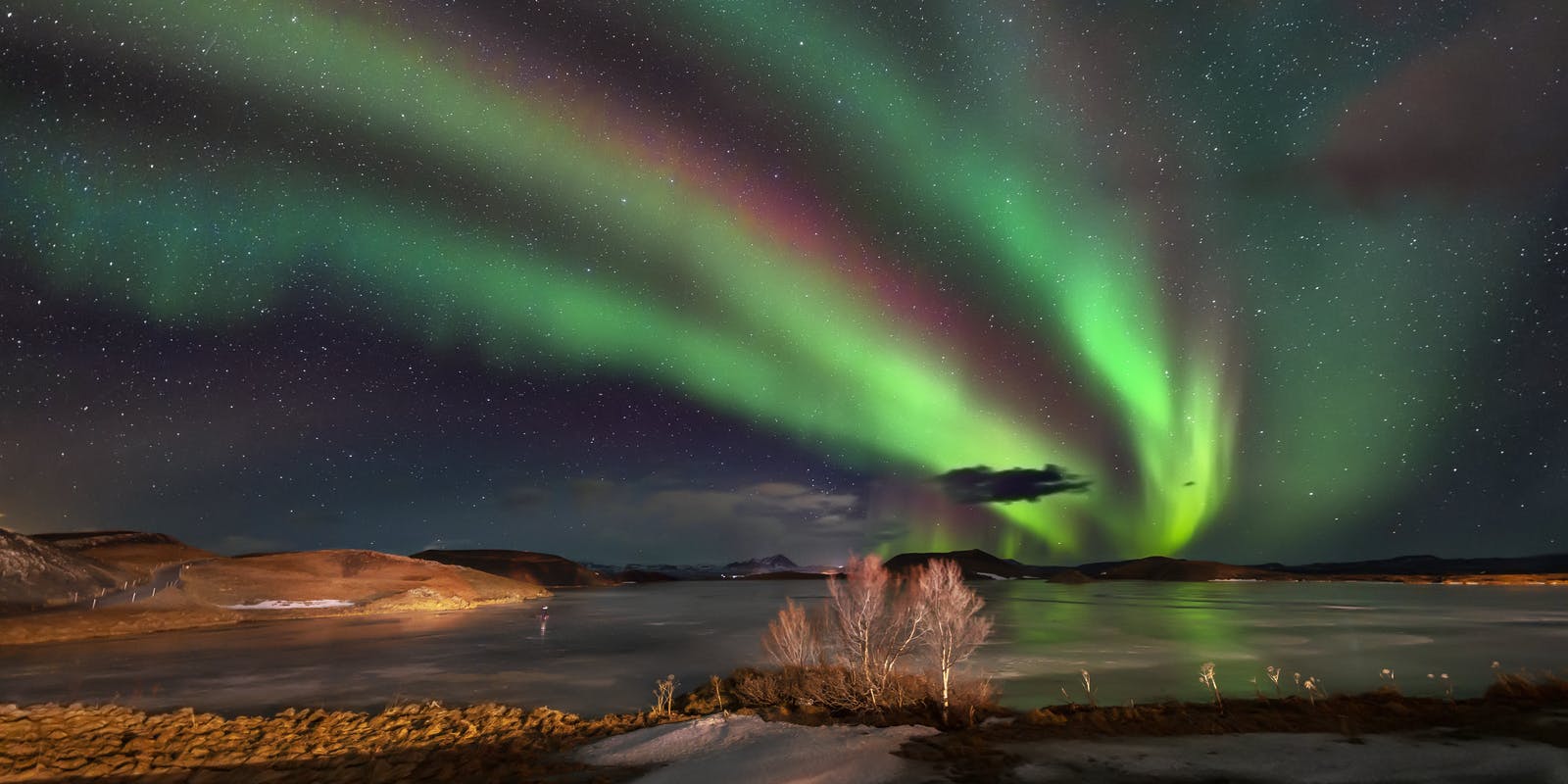
Catching the Northern Lights in Iceland is all about timing and preparation. Thankfully, several reliable tools and apps make it easier to plan your viewing nights with confidence. Here are some of the best options:
- Vedur.is – Iceland’s official meteorologicalwebsite and the most trusted source for aurora forecasts, cloud coverage, and real-time weather updates.
- Perlan Aurora Forecast – Offers detailed auroral strength predictions, cloud maps, and interactive time windows, all presented in an easy-to-read visual format.
- Hello Aurora – Combines live user sightings, forecast data, and alert notifications. Its crowd-sourced reports help you verify if the lights are visible in specific areas.
- My Aurora Forecast – A convenient app providing real-time KP index alerts and notifications tailored to your location.
- SpaceWeatherLive / NOAA / SWPC – Great for understanding solar wind activity and space-weather conditions that influence aurora intensity.
- IcelandAtNight.is – Features community sightings, sky conditions, and local tips for finding the best viewing spots in real time.
Pro Tip: Use a combination of tools for accuracy. Start with Vedur.is or Perlan for official data, then cross-check with Hello Aurora or IcelandAtNight for real-time user insights on current aurora visibility.
When Should I Set Out, and How Long Should I Wait?
For optimal viewing, begin your aurora hunt approximately one to two hours after sunset. Forecasts frequently indicate peak activity occurring between 10:00 PM and 2:00 AM local time.
Patience is essential for a successful viewing experience. It is advisable to come prepared with warm clothing, hot beverages, and a tripod for photography.
Be prepared to remain mobile and relocate to areas with clearer skies if cloud cover increases. Often, the display can begin unexpectedly, rewarding those who wait.
Sample Night: Reading the Forecast in Practice
Let’s imagine a night in March:
- The aurora forecast on Vedur.is indicates KP 3–4 activity between 22:00 and 02:00, focusing on northern and central Iceland.
- The cloud overlays suggest low cloud cover in the southeast, with clearer skies in the west and north.
- Perlan’s forecast aligns, noting low-to-mid cloud patches but highlighting promising clear areas near Snæfellsnes.
- Hello Aurora reports a recent sighting near Stykkishólmur, shared 30 minutes prior.
- Based on this information, you decide on the west/north region, departing at 21:30 and settling at a dark location near Kirkjufell to wait.
- By midnight, green aurora bands appear. You adjust your position and photograph until 01:30.
Even if KP levels drop or cloud cover increases later, you’ve optimized your opportunities by leveraging layered forecasts and live updates effectively.
Tips & Best Practices When Using Aurora Forecasts
Ready to catch the Northern Lights? Here are our top tips and best practices for using aurora forecasts:
- Don't put all your eggs in one basket. Cross-reference a few different forecast sources instead of relying on just one.
- Think short-term. Forecasts for the next 6-12 hours are your most reliable bet. Long-range predictions can be a shot in the dark.
- Keep an eye on the clouds. Pay close attention to low-cloud forecasts—they can make or break the light show.
- Embrace the darkness. Plan your aurora hunt around a new moon or when moonlight is low for the best visibility.
- Listen to the crowd. Monitor live alerts and crowd-sourced sightings. If someone spots activity nearby, be ready to pivot!
- Stay flexible. Sometimes, the best view is a short drive away. Being ready to move can get you under clear skies when it matters most.
- Pack like a pro. Always bring your essential gear: a sturdy tripod, extra batteries, warm layers, and a headlamp with a red-light setting to preserve your night vision.
FAQs
When is the best time to see the Northern Lights in Iceland?
The northern lights season runs from late August through winter months, when dark skies dominate. For great aurora viewing, check the northern lights forecast and go where there’s less light pollution, like Thingvellir National Park or South Iceland.
How do I read the aurora forecast in Iceland?
Follow the real time aurora forecast showing aurora oval, cloud cover forecast, and earth’s magnetic field strength. The higher the activity, the stronger the northern lights dancing across the northern hemisphere.
What affects aurora visibility?
Avoid city lights and mid-level clouds. Clear nights with partly clear skies give the best northern lights viewing. Always compare the weather forecast with the aurora forecast Iceland updates.
Where are the best locations to watch the aurora?
Head to Thingvellir National Park, South Iceland, or other remote locations with low light pollution. These spots give you a front-row view of the natural light show when solar particles from the sun interact with Earth’s atmosphere.
Conclusion
Learning to read Iceland's aurora forecasts can feel like learning a new language, but it's totally worth it. Once you get the hang of it, you'll know exactly where to go and when.
Just remember to check the KP index, cloud cover, and solar data. Don't forget to look at real-time reports and make sure it's dark enough outside.
If you combine this knowledge with a bit of patience, some warm clothes, and a car, you're all set to see the Northern Lights. With 2025 being a peak year for solar activity, you've got a great chance of seeing an amazing show. Let the maps guide you.